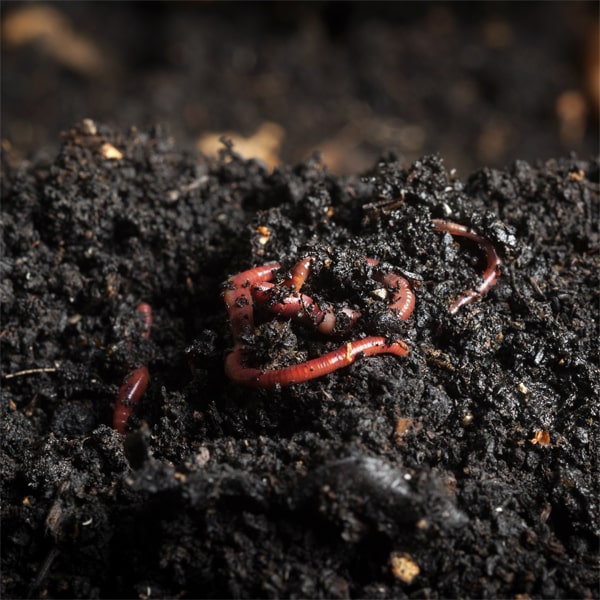
On the north side of Weston Nurseries Bulk Yard two and half years ago my coworker Roberto and I were weeding around trees when I noticed granular piles of soil. Upon further investigation we found hundreds of worms under the mulch around the trees.
Roberto suggested harvesting the worms for our finished compost piles, but I wanted to know more about what worms do in the compost. This started my fascination with vermicomposting and worms in general.
After doing research on the internet I decided to order 6,000 Red Wigglers (“composting worms”) from a website to seed my finished compost piles, and start my own homemade worm composter in my office. I used Weston’s Best Organic finished compost as bedding and fed them fruit scraps, veggie scraps, and coffee grounds.
Red wigglers are prolific breeders, and I have observed that they almost double their population every four months. After only nine weeks after birth the mature worms are able to produce a small lemon-shaped cocoon, and shortly after three to five small white thread-like worms emerge to start the cycle again.
Red worms are content to remain working for you in conditions that are to their liking. If these conditions are maintained, they will recycle your food scraps and leave you with nutrient-rich castings that can be added to any soil to give it a boost.
Now that you know a little about my experience in worm farming, I encourage you to find a worm supplier and start your own worm composter at home.
Patrick J. Goudreau, Bulk Materials Yard Supervisor
Weston Nurseries- Hopkinton