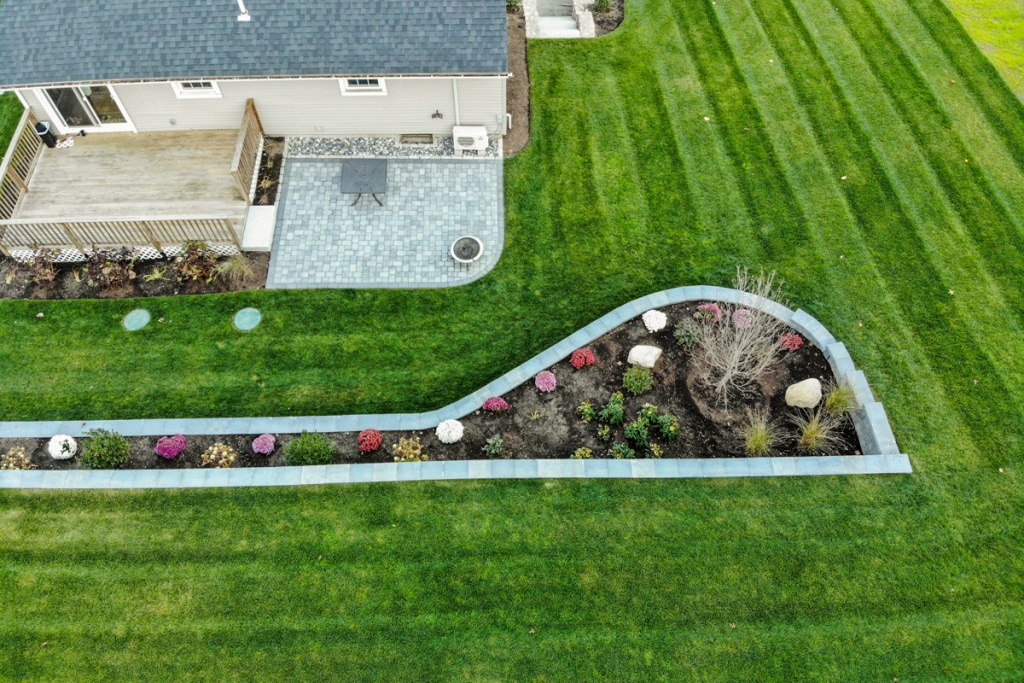
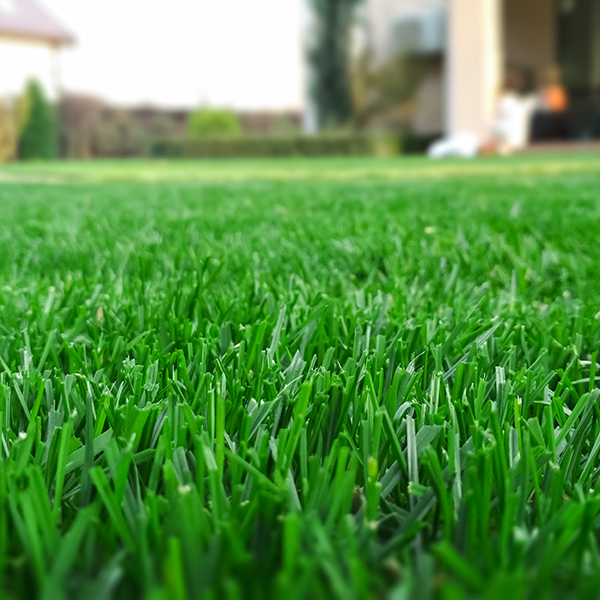
Reduce mowing height to 3 inches, and and begin mulching and raking leaves as they fall. This helps to fortify the turf and prevents tufts and patches.
As temperatures cool and growth decreases, reduce mowing frequency.
Lawns typically need an inch or more of water a week, but you should ease up on irrigation frequency as fall approaches.
In late summer & early fall, apply a slow release fertilizer with a solid dose of nitrogen.
Tackle weak patches or dead areas by re-seeding. Be sure to water that new grass!
Keep an eye on damage from insects or disease.
If your lawn is particularly thick or thatchy, aerate and loosen up that thatch.
Late fall is an important time to fertilize- give spring growth a boost by applying a slow release fertilizer to dormant grass.